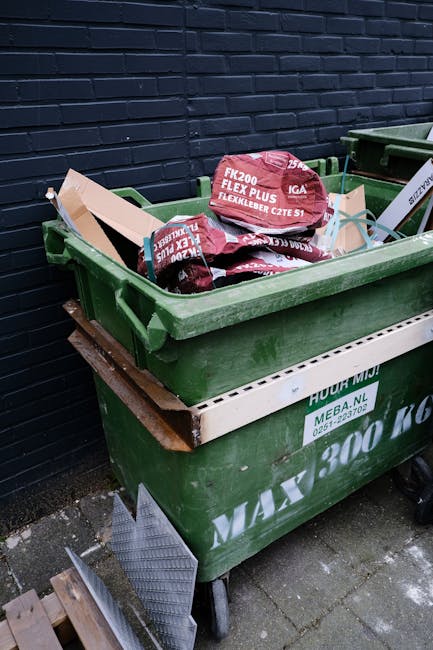
Builders waste and bulky rubbish removal Stockley Park Hayes: a practical guide for faster, safer clearances
If you are dealing with a renovation, strip-out, office fit-out, or a pile of bulky rubbish that has somehow grown legs and taken over the corner of a site, you are probably after one thing: a simple, reliable way to clear it. That is exactly where Builders waste and bulky rubbish removal Stockley Park Hayes comes in. Done properly, it keeps the job moving, reduces trip hazards, and stops a small mess turning into a much bigger headache.
In Stockley Park and the wider Hayes area, speed matters. So does access, safety, and getting rid of waste in a way that does not create extra problems later. This guide explains how the process works, what to expect, how to plan it, and how to avoid the usual mistakes that waste time and money. It also covers bulky items, compliance considerations, and a few practical tips from real-world site clearances. Let's make it straightforward.
Why Builders waste and bulky rubbish removal Stockley Park Hayes Matters
Builders waste is not just "rubbish". It is a mix of broken materials, packaging, offcuts, rubble, timber, plasterboard, fixtures, and other debris that can quickly make a site awkward to work on. Bulky rubbish adds another layer: wardrobes, desks, old appliances, broken furniture, mattresses, and oversized items that do not fit a normal bin. In a busy business district like Stockley Park, that mix can become a real obstacle very quickly.
Why does it matter so much? Because clutter affects more than appearance. It can slow down trades, block loading areas, cause accidents, and make a project look unfinished even when the hard work is done. On commercial jobs, that unfinished look can be especially unhelpful. Clients notice. Neighbours notice. Site teams notice. And yes, the smell of wet plasterboard or old carpet in summer is not exactly a selling point.
A professional clearance approach keeps waste moving off-site at the right time, which is often the difference between a smooth project and one that feels permanently behind. It also helps you manage mixed waste more intelligently, especially when you need to separate recyclable materials, specialist items, or anything that should not be handled casually. For larger jobs, it can sit neatly alongside builders waste clearance and broader waste removal support, rather than relying on ad hoc pile-ups and hopeful thinking.
Expert summary: The best builders waste and bulky rubbish removal is the one that keeps the site safe, the schedule moving, and the waste stream handled properly the first time.
How Builders waste and bulky rubbish removal Stockley Park Hayes Works
The process is usually simpler than people expect, but there is a right way to do it. The basic idea is this: the waste is assessed, access is checked, a suitable removal plan is agreed, and the load is cleared by a trained team using the correct vehicle and lifting approach. Sounds obvious, but the details matter. A lot.
For example, a light refurbishment in an office unit may create mostly packaging, carpet, broken partitions, and a few large items. A domestic conversion may involve rubble, old fixtures, doors, kitchen units, and that one heavy piece of furniture no one wants to touch. The right service adapts to the material, the amount, the access route, and the timing.
In practice, the work may include:
- loading loose builders waste by hand where safe and practical
- moving bulky items from inside a property, yard, or loading bay
- separating reusable or recyclable materials where possible
- taking care with sharp, dusty, or awkward materials
- making sure the site is left tidy rather than half-finished
If an item is especially awkward, such as a fridge, a large appliance, or an old sofa wedged into a tight stairwell, a specialist approach may be more suitable. That is where it helps to understand the difference between general bulky clearance and more specific services like fridge and appliance removal or mattress and sofa disposal.
Access is often the quiet hero of the whole operation. If a van cannot park close enough, or if waste has to be carried a long distance through a building, the job takes longer and needs more planning. That is normal. It is just better to know it upfront than discover it when someone is already carrying a cupboard down three flights of stairs. Nobody enjoys that moment.
Key Benefits and Practical Advantages
There are obvious benefits, and then there are the ones people only appreciate after they have lived through a messy job. Both matter.
- Cleaner, safer workspaces: Less loose material on the floor means fewer slips, trips, and minor injuries.
- Better project flow: Trades can move faster when waste is removed on time instead of being stepped around.
- Less visual clutter: A tidy site looks more professional to clients, neighbours, and building management.
- More practical disposal: Different waste types can be sorted, handled, and recycled more effectively.
- Reduced stress: You are not left trying to work out where to store half a kitchen for a week.
There is also a quieter commercial benefit. If you are working in Stockley Park, where access and site presentation can be sensitive, prompt clearance helps protect your schedule and reputation. A delayed clearance can hold up decorating, snagging, handover, or even simple cleaning. To be fair, the waste itself is rarely the glamorous part of any job, but it can decide whether the end of the job feels smooth or slightly chaotic.
For businesses, this may overlap with broader business waste removal needs, especially where bulky items, fit-out debris, or repeated waste collections are involved. That flexibility is useful. Very useful, actually.
Who This Is For and When It Makes Sense
This service makes sense for a wide mix of people, not just builders. In fact, many jobs labelled "builders waste" are really a blend of construction debris and bulky items from offices, homes, storage areas, or commercial premises.
You may need this kind of removal if you are:
- a contractor carrying out refurbishment, strip-out, or maintenance work
- a landlord clearing a property after repair or upgrade work
- a facilities manager responsible for a site refresh
- a business owner replacing furniture, fixtures, or equipment
- a homeowner dealing with renovation leftovers and large unwanted items
- someone clearing a garage, loft, or outbuilding after years of buildup
It also makes sense when a skip is not the right fit. Maybe there is limited space. Maybe the waste is mixed with bulky items. Maybe the site has restricted access or awkward loading. In those situations, a direct collection can be far less disruptive. If you are unsure what can go where, it can help to review what can go in a skip and compare that with a more flexible removal option.
And honestly, if the waste is already making the site feel smaller, darker, and a bit more irritating every day, that is usually your sign. You do not need to wait until the pile becomes a monument.
Step-by-Step Guidance
Here is the practical version. No fluff, no mystery.
- Identify the waste types. Separate builders debris from bulky household or office items if you can. This makes planning easier.
- Check access. Measure doors, lifts, stairways, loading points, and parking restrictions. Tiny details matter here.
- Estimate volume. You do not need a perfect measurement, but a rough idea of how much is going helps avoid surprises.
- Flag special items early. Appliances, mattresses, furniture, and any hazardous material need extra attention.
- Choose the right removal method. A mixed clearance may suit a site better than a skip, especially where access is tight.
- Prepare the space. Move items to a safe loading point if possible, and keep walkways clear.
- Confirm timing. Try to align collection with the end of noisy work or the point where the site needs to be handed back.
- Keep records where relevant. For commercial jobs, documentation around waste handling is wise and sometimes essential.
A small but important detail: do not leave sharp offcuts, broken glass, nails, or loose rubble hidden under tarps or boards. It slows everything down and creates unnecessary risk. Most teams can deal with messy sites, but everyone appreciates not being ambushed by a rogue screw in the sole of a boot.
If the job involves a large number of items or repeated collections, booking online through online booking can be a convenient starting point, followed by a discussion of access, timing, and the exact waste mix.
Expert Tips for Better Results
In our experience, the jobs that go best are the ones where the customer has thought through three things: access, sorting, and timing. Everything else flows from there.
- Keep a clear loading lane: A tidy path from the waste pile to the vehicle saves time and reduces damage risk.
- Photograph the waste area: A quick phone photo can help you explain the scale of the job accurately.
- Separate hazards early: If there is anything sharp, dusty, oily, or potentially hazardous, isolate it immediately.
- Do not overpack rooms: It is tempting to keep stacking things "just for now". That usually backfires.
- Think in stages: For bigger refurbishments, plan one clearance before final fix, then another at completion.
One thing people forget: bulky rubbish is often heavier and more awkward than it looks. A wardrobe that seems manageable in a showroom can become a back-aching puzzle once it is partly dismantled in a hallway. So yes, use common sense. Your back will thank you.
If the job includes items that need special handling, use the right specialist page rather than forcing everything into a generic pile. For example, furniture can often be handled separately through furniture clearance or furniture disposal, which can be a neater route for mixed property clearances.
Common Mistakes to Avoid
Most clearance problems are avoidable. That is the good news. The less-good news is that the same mistakes keep happening.
- Underestimating volume: People often guess too low. A small pile can expand fast once broken materials are sorted properly.
- Leaving everything to the end: If waste is not removed throughout the job, it can become the thing that delays completion.
- Mixing unsuitable items together: Some materials should be isolated for safety or compliance reasons.
- Ignoring access restrictions: Parking, lifts, restricted bays, and narrow corridors can all affect the plan.
- Assuming bulky means simple: A heavy sofa, appliance, or cabinet may need more than brute force and optimism.
There is also a paperwork mistake that commercial customers make: not checking what is being removed and where it is going. For many businesses, especially those with regular waste streams, that matters. If you manage a site with repeated clearances or ongoing operational waste, it is worth understanding the basics of recycling and sustainability as part of the decision, not as an afterthought.
Another classic error? Booking a collection without first checking whether appliances, mattresses, or broken fixtures need separate handling. That is the sort of thing that turns a tidy clearance into a slightly awkward conversation. Not terrible. Just avoidable.
Tools, Resources and Recommendations
You do not need a van-load of specialist equipment to prepare for a clearance, but a few simple tools make life much easier. A tape measure, gloves, strong bin bags, a marker pen, and a phone camera can go a long way. For larger sites, a trolley, sack truck, or basic moving straps may help, provided they are used safely.
My practical recommendations are simple:
- Use gloves with grip for handling rough timber, plasterboard, or broken packaging.
- Keep a waste list so you do not forget hidden items in cupboards, corners, or outdoor storage.
- Check the building rules if you are in a managed office, estate, or serviced property.
- Plan around business hours where noise, loading access, or customer flow is an issue.
- Choose the right support page if the job is mainly one type of item rather than general waste.
For example, if your project has left behind a lot of office furniture or partition debris, the job may overlap with office clearance. If it is more about emptying a domestic property after works, then home clearance or house clearance may be the more natural fit. That distinction helps you keep the scope clean and the quote more accurate.
And if you want to understand the company's approach to safe handling and customer confidence, it is sensible to review health and safety policy and insurance and safety. Those pages are not glamorous, but they do matter. Quite a lot.
Law, Compliance, Standards, or Best Practice
Waste handling in the UK is not something to treat casually, especially on commercial or mixed-use sites. You do not need to become a legal expert to make good decisions, but you should understand the basics: waste should be collected, transported, and handled responsibly by people who know what they are doing. For business customers, keeping accurate records and using appropriate disposal routes is part of good practice.
There are also practical safety expectations. Builders waste often includes dust, sharp edges, protruding nails, broken boards, and heavy fragments. Bulky rubbish may contain springs, metal frames, or hidden fixings. The safe approach is to assess, sort, and move waste in a way that reduces risk. That sounds basic. It is basic. But it is where a lot of problems start.
For hazardous or potentially hazardous materials, do not assume they can be bundled in with general rubbish. Separate handling is needed for anything that may be dangerous, contaminated, or regulated. If you suspect a load includes materials that need extra care, a dedicated hazardous waste disposal route is the safer option.
Best practice also includes fair communication: the customer should explain what needs removing, and the removal team should be clear about what can be taken, how access will work, and what the job includes. That sounds modest, but it prevents a lot of friction. Nobody likes vague arrangements, especially at 7:30 on a wet morning when the lift is out and the loading bay is blocked.
Options, Methods, or Comparison Table
Different waste situations call for different methods. The best option depends on the type of waste, how much there is, and how awkward the site is to work on. Here is a simple comparison to help you think it through.
| Method | Best for | Strengths | Limitations |
|---|---|---|---|
| Direct bulky waste removal | Large items, mixed clearances, awkward access | Flexible, fast, less site disruption | May need pre-planning for heavier or specialist items |
| Builders waste clearance | Debris from refurbishment, strip-outs, repairs | Suited to rubble, timber, offcuts, packaging | May not suit very bulky furniture or certain appliances |
| Skip-based disposal | Longer projects with predictable waste generation | Useful for ongoing accumulation | Can be limited by space, permits, or access constraints |
| Specialist item removal | Appliances, mattresses, single large furniture pieces | Handled with more precision | Requires correct classification of the item type |
If you are stuck between options, a simple rule helps: choose the method that creates the least disruption while still handling the waste correctly. That is usually the most cost-effective choice in the real world, even if it does not look like the cheapest line on paper at first glance.
Case Study or Real-World Example
Picture a fit-out in Stockley Park on a weekday afternoon. The site has old desks, packaging, broken panels, some timber offcuts, and a couple of bulky chairs that no one wants to leave lying around until Monday. The team has one eye on the schedule, one eye on the client, and one eye on the nearest exit because, well, that is how busy jobs feel when they are almost finished.
The sensible move is to separate the waste into clear groups early on: reusable items, general builders debris, bulky furniture, and anything that needs extra care. A loading route is chosen before the removal begins. That means fewer stops, fewer surprises, and less double-handling. The site is left cleaner, the handover feels smoother, and the last-day scramble stays relatively small. Relatively. There is always a little scramble.
In another common scenario, a landlord has just had a property refurbished after a long tenancy. The builders have gone, but the hallway still has broken shelving, a damaged mattress, and a pile of packaging from the new kitchen install. The job is no longer about construction alone; it is about getting the space fully ready again. A mixed clearance approach handles that more neatly than trying to treat each item as a separate problem.
That is the real value of a good clearance service: it deals with the mess as it exists, not as a neat category in someone's spreadsheet.
Practical Checklist
Use this checklist before booking or starting a clearance. It will save you time, and probably a few headaches too.
- Confirm the waste types: rubble, timber, packaging, furniture, appliances, or mixed debris
- Check access: doors, stairwells, lift size, parking, and loading restrictions
- Identify any hazardous or unusual items
- Estimate how much waste needs removing
- Decide whether it is a one-off clearance or part of an ongoing job
- Keep walkways and exits clear
- Photograph the waste area if helpful
- Separate anything that may be reusable or recyclable
- Choose a removal method that suits the site, not just the pile
- Review related services if the job includes furniture, appliances, or office items
Small reminder: if your project is mainly about a tidy finish rather than a massive volume of rubble, you may be better served by a targeted clearance instead of an all-purpose dump-and-run. Precision helps.
Get a free quote today and see how much you can save.
Conclusion
Builders waste and bulky rubbish removal in Stockley Park Hayes is really about control. Control over timing, safety, presentation, and the final feel of the job. When waste is managed properly, the whole project feels lighter. Faster. Less awkward. And that is worth a lot when deadlines are tight and access is not always perfect.
If you take one thing from this guide, let it be this: plan the clearance as part of the job, not as the awkward final afterthought. A little planning at the start can save a great deal of frustration at the end. And if a pile of waste is already sitting there staring back at you, there is no shame in dealing with it now rather than later. Later has a funny habit of becoming more expensive.
For a smoother route, compare your waste type with the right service pages, think through access, and choose the option that keeps your site safe and moving. That is usually the cleanest answer, in every sense.
Frequently Asked Questions
What counts as builders waste?
Builders waste usually includes rubble, plasterboard, timber, broken tiles, packaging, old fixtures, offcuts, and similar debris created during construction, repair, or refurbishment work.
Can bulky rubbish be removed with builders waste?
Yes, in many cases it can. Bulky items such as desks, chairs, cupboards, mattresses, and sofas are often cleared alongside construction debris if the load is planned properly.
Is this suitable for commercial properties in Stockley Park?
Absolutely. Offices, managed buildings, units, and refurbished commercial spaces often need mixed waste clearance where access, timing, and cleanliness all matter.
Do I need a skip, or is a removal service better?
It depends on space, access, waste type, and project length. If you have limited parking or a mixture of bulky items and debris, a direct removal service may be more practical.
What should I do with appliances or broken fridges?
Appliances are often better handled separately, especially items like fridges or freezers. These can need more careful removal and may not belong in a general builders waste load.
How do I prepare a site for clearance?
Clear pathways, group waste by type if possible, flag anything hazardous, and make sure the team can reach the loading point without unnecessary obstacles.
What if there are hazardous materials mixed in?
Do not mix them with ordinary waste. Anything that may be hazardous should be identified early and handled through the appropriate disposal route.
Can furniture be taken away during a builders clearance?
Yes, often it can. If the job includes office furniture, domestic furniture, or a mix of both, it may be worth using a dedicated furniture-related service as part of the plan.
How do I avoid delays on the day?
Give a clear description of the waste, check access in advance, make parking arrangements where needed, and confirm the collection timing before the job starts.
Is this service only for large jobs?
No. Smaller clearances can benefit too, especially when the waste is awkward, heavy, or difficult to move safely without help.
Why does compliance matter if it is just rubbish removal?
Because waste handling still carries safety, environmental, and documentation responsibilities. Good practice protects the site, the people on it, and the business behind it.
Where can I learn more about the company and its approach?
You can review the company background on the about us page, or look at practical details such as pricing and quotes and payment and security if you are comparing options.
And if you are at the stage where the waste is already taking over your corridor, your yard, or that one stubborn corner everyone keeps ignoring, take it as a friendly sign. Clear it, move on, and give the site room to breathe again. That small reset can make a bigger difference than you think.